


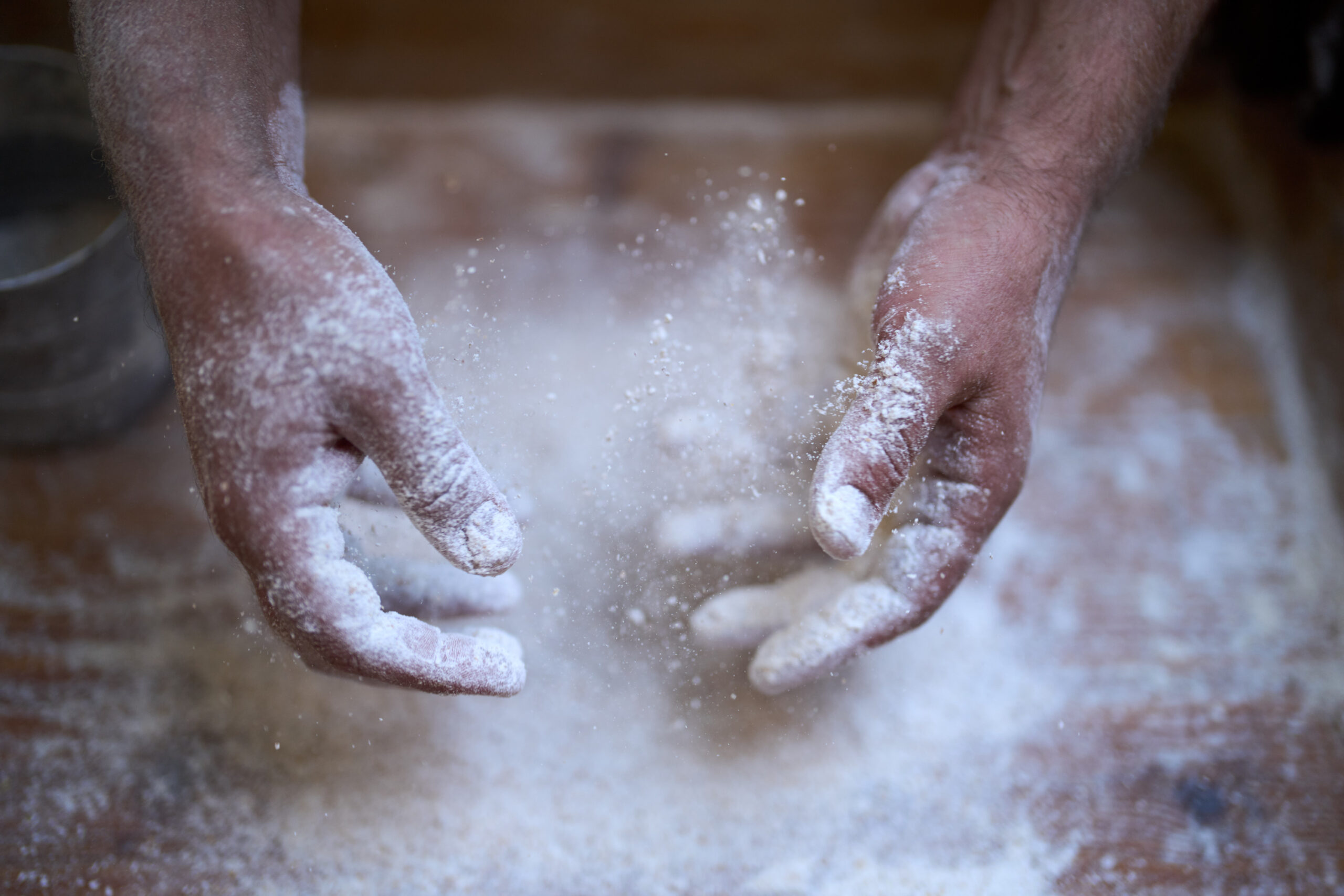
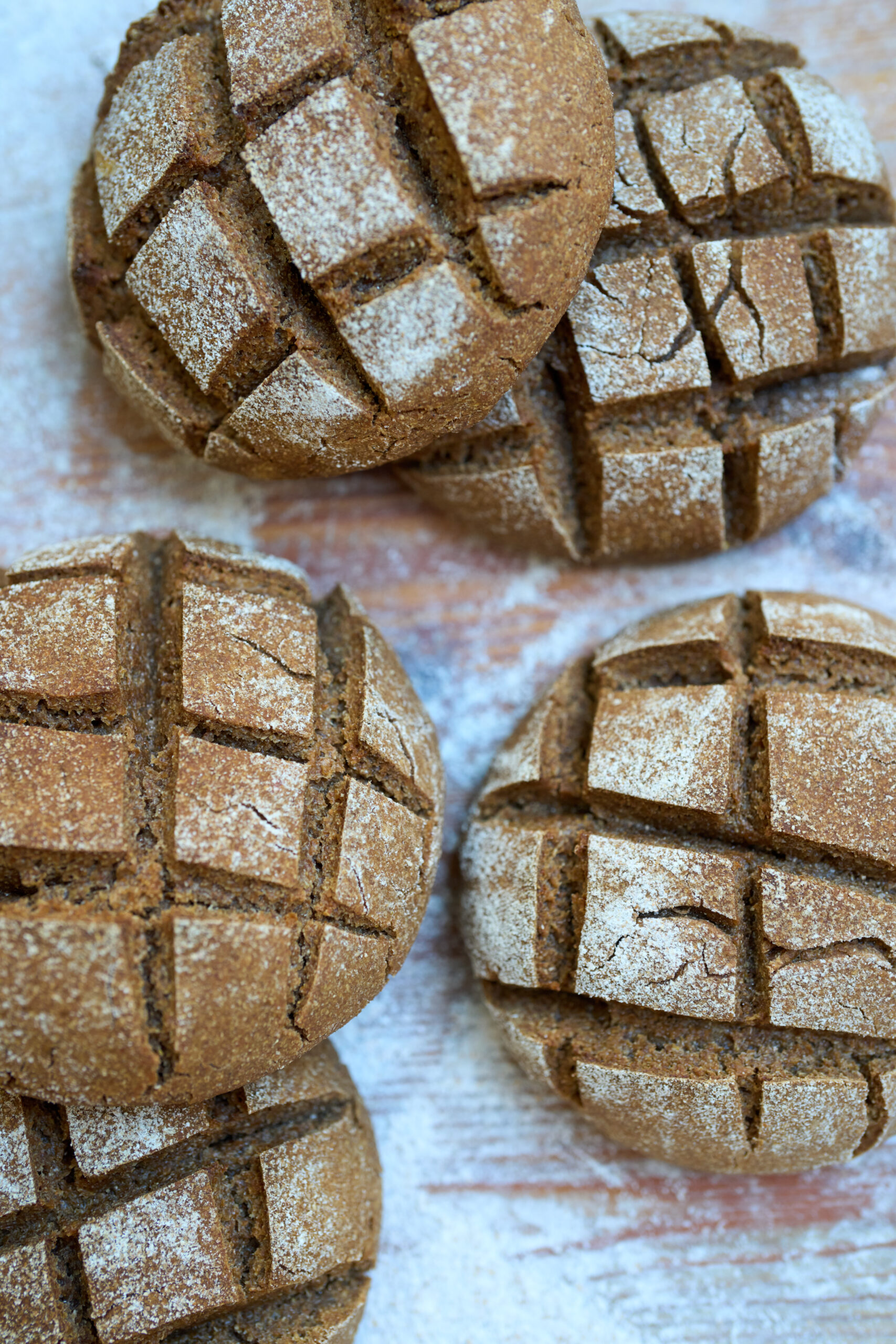
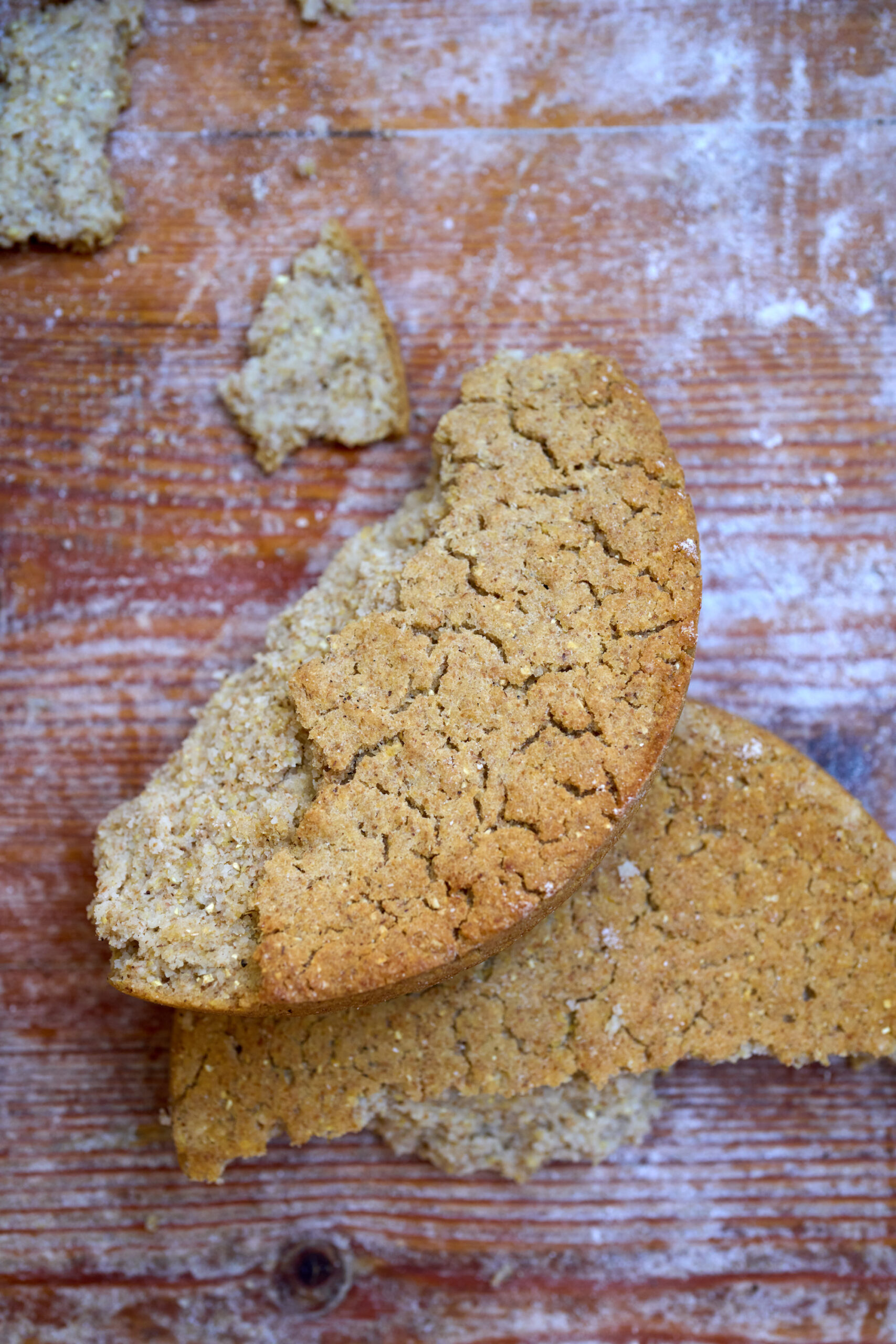
The flour defines the bread. We control the flour.
Most bakeries begin at the mixing stage. They receive flour from a supplier and work with what they are given. The composition is fixed. The freshness is determined by the production date on the bag.
At Artizani, the process begins earlier — at the grain. Every decision made before the dough is mixed determines what is possible afterward. This is the full sequence.
Grain selection
Bread begins with grain, not flour.
The variety of grain, its growing conditions, its protein content, and its mineral composition determine how the flour will behave — and how the bread will taste. Artizani works with eight grains: wheat, rye, barley, einkorn, emmer, durum, spelt, and corn. Each is selected specifically. None is interchangeable with another.
The grain is the raw material on which everything that follows depends.
→ Our eight grains
Grain cleaning
Before any grain enters the mill, it is cleaned.
Grain from the field carries more than grain: dust, small stones, broken kernels, and field debris. If these are not removed, they pass through the mill and into the flour. They affect the consistency of the milling, the quality of the flour, and the wear on the millstones.
At Artizani, grain is cleaned on site before every milling session. Not as an extra step — as the first one.
Quality is also what you remove before you begin.
Stone milling
The grain passes between two slowly rotating stones — milled whole, at low speed, generating low heat.
Bran, germ, and endosperm are milled together. Nothing is separated. Nothing is extracted. Nothing is added back.
The low speed matters. Industrial milling generates heat through friction — heat that degrades enzymes, oxidises the fats in the germ, and diminishes aromatic compounds. Stone milling, controlled carefully, keeps the temperature low enough that the flour retains the full biological activity of the grain.
Artizani mills its own flour in-house. The flour is used in the same production cycle it was milled — not stored, not standardised, not fixed before it is needed.
Flour fractions and extraction
When grain passes through the mill, it produces a range of fractions — from fine endosperm flour to coarser bran-rich material. Extraction rate determines how much of the grain is retained in the final flour.
100% extraction: the entire grain becomes flour — true wholegrain. 70% extraction: most bran and germ removed — white flour. 80–85% extraction: some bran retained, most germ present.
At Artizani, we separate and recombine these fractions depending on the bread being made. We do not work with a fixed flour composition — we work with a composition we design, adjusted for each grain, each bread, each intended crumb structure.
This level of control is only possible because we mill our own flou
Mixing and hydration
Hydration — the ratio of water to flour — governs three variables simultaneously: gluten development, fermentation pace, and how the dough handles. It is not a measure of wetness. It is a decision with consequences for every stage that follows.
At Artizani, water temperature is calculated before every mix — based on the ambient temperature of the space, the flour temperature, and the target final dough temperature. A two-degree difference shifts the fermentation timeline by thirty to forty-five minutes. That shift cannot be corrected after mixing.
The dough is mixed to the correct point of development — not past it. The endpoint is a physical state, not a time on a clock.
Fermentation
Fermentation is not a rising agent. It is a transformation.
When flour meets water and a live sourdough culture, enzymes break down complex starches into simpler sugars. Microorganisms metabolise those sugars, developing organic acids — lactic and acetic — that build structure and flavour. The dough becomes more extensible, more open, more digestible.
This process takes sixteen to twenty hours, depending on the grain and the temperature. It cannot be shortened without changing the result.
At Artizani, fermentation occurs in a temperature-controlled environment. The baker reads the dough throughout: checking its volume, its surface tension, its response to touch. Fermentation ends when the dough is ready — not when the clock says.
Shaping and cold proof
Shaping is where fermentation becomes form.
By the time dough reaches this stage, bulk fermentation has built the internal structure. Shaping organises it — creating surface tension across the outer skin of the dough that holds the loaf together during the final proof and determines how it opens in the oven.
Shaping is also where the baker reads the dough one last time — assessing whether the bulk is complete, whether the surface is extensible or tight. There is no instrument for this. It is knowledge built through repetition.
After shaping, the dough enters cold fermentation — a slow, controlled final proof at low temperature. Structure stabilises. Flavour continues to develop.
Baking
The oven is the last stage of the process. Not the most important one.
By the time the dough enters the oven, everything that defines the bread has already happened — in the grain, in the milling, in the fermentation. What the oven does is make the invisible visible.
Steam in the first phase keeps the surface extensible so the bread can expand fully before the crust sets. Dry heat follows, caramelising the surface and developing the crust.
The oven does not correct what the process left unfinished. It reveals it.
From grain to bread - the complete system.
Each stage in this sequence is connected to the one before and the one after. Change one variable — the grain, the hydration, the fermentation temperature, the shaping — and the result changes.
Bread is not assembled. It is developed through a sequence of connected decisions, each carrying forward.
At Artizani, we do not begin at the mixing stage. We begin at the grain — and we control every step between there and the bread on the shelf.
→ See the bread this process produces → /the-bread