


The Bread
Eight grains. Each stone-milled in-house. Each producing a different bread.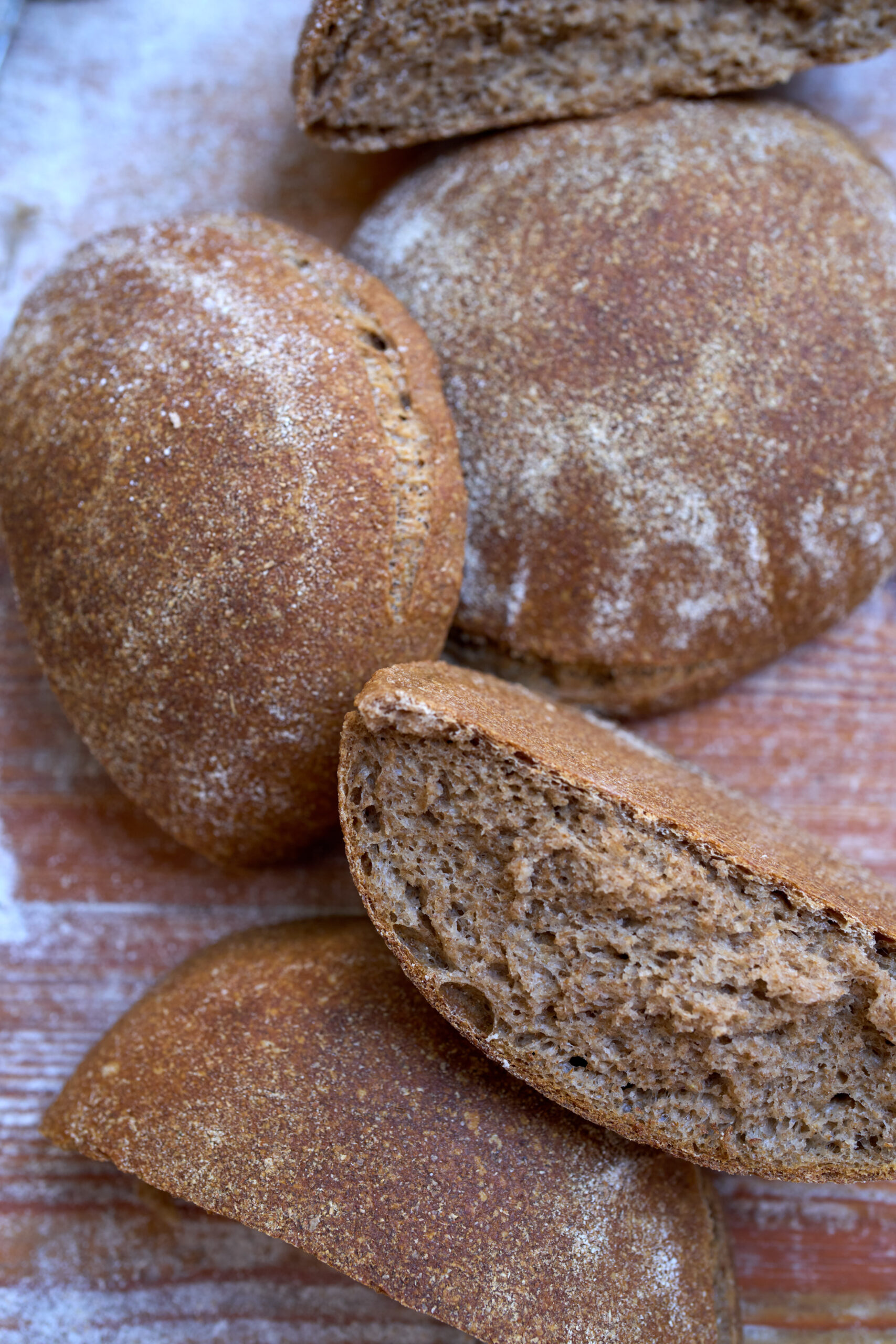
All our bread shares the same foundation.
Grain we selected. Flour we milled. Fermentation that ran the time it needed.
No commercial yeast. No improvers. No shortcuts. What changes across our bread is the grain — and with it, the fermentation character, the crumb structure, the flavour, and how the bread keeps. Each bread is the result of its grain, not a variation on a theme.
Practical note: Bread is available daily at the bakery. We bake a limited number of loaves each day. To reserve in advance, contact us the day before by phone or message. No prices are shown on this page — pricing is available at the bakery.
Wholegrain sourdough
Wholegrain sourdough Stone-milled whole wheat · The Artizani flagship
Process: Sixteen to twenty hours fermentation · Controlled temperature throughout · Long cold proof
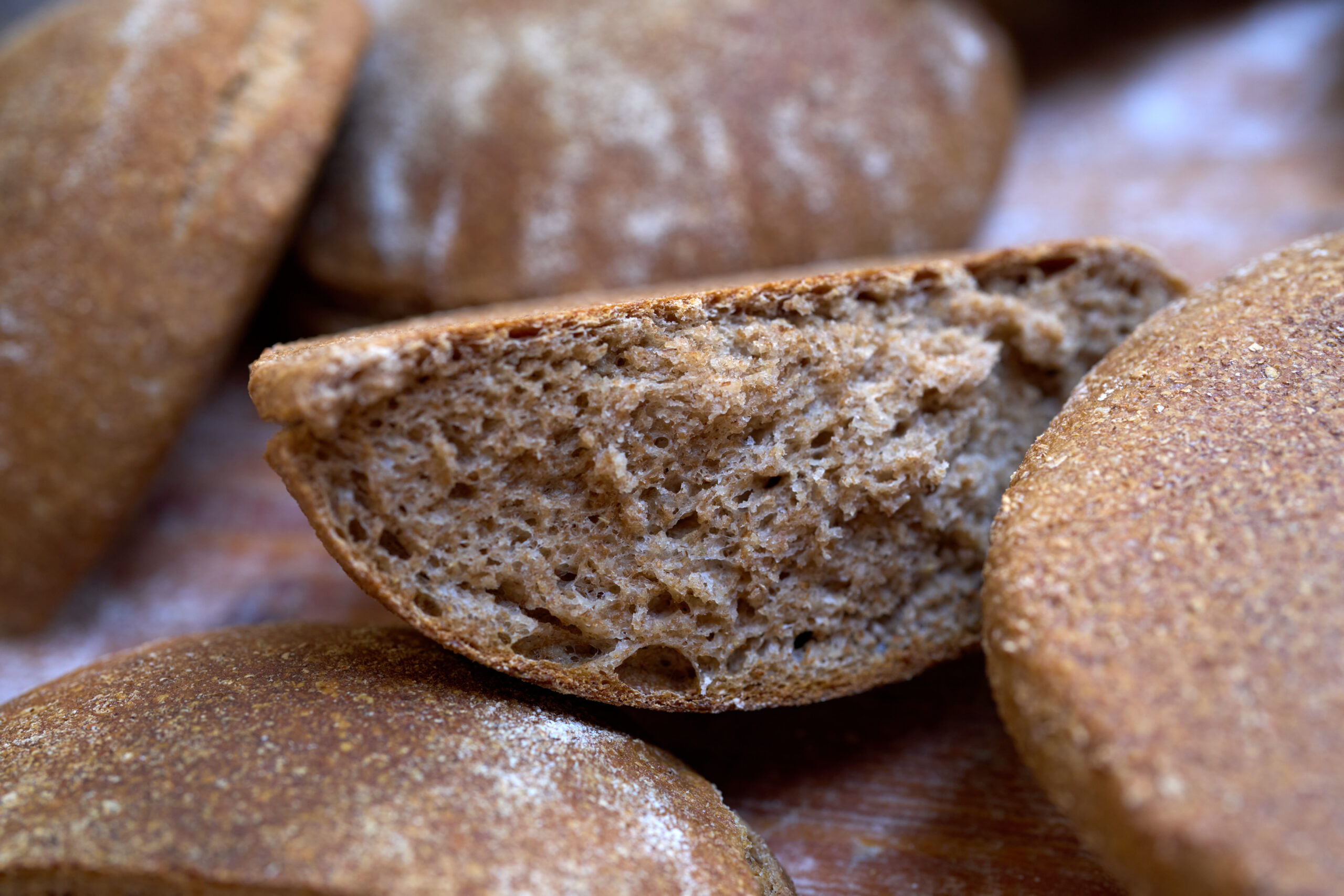
The bread that defines Artizani. Made from stone-milled whole wheat — all three parts of the grain intact, milled in-house and used in the same production cycle.
The crumb is open and structured, built through long fermentation in a controlled environment. The crust is firm and holds its character through the day. The flavour is complex — not sour for its own sake, but developed through time and live culture. It is not a light bread. It is a substantial one, meant to be eaten slowly, in thick slices, with something simple alongside it.
At its best: day of baking and the following day.
Rye sourdough
Rye sourdough Stone-milled whole rye
Process: Controlled fermentation · Dense, moist crumb structure · Slice thicker than wheat bread
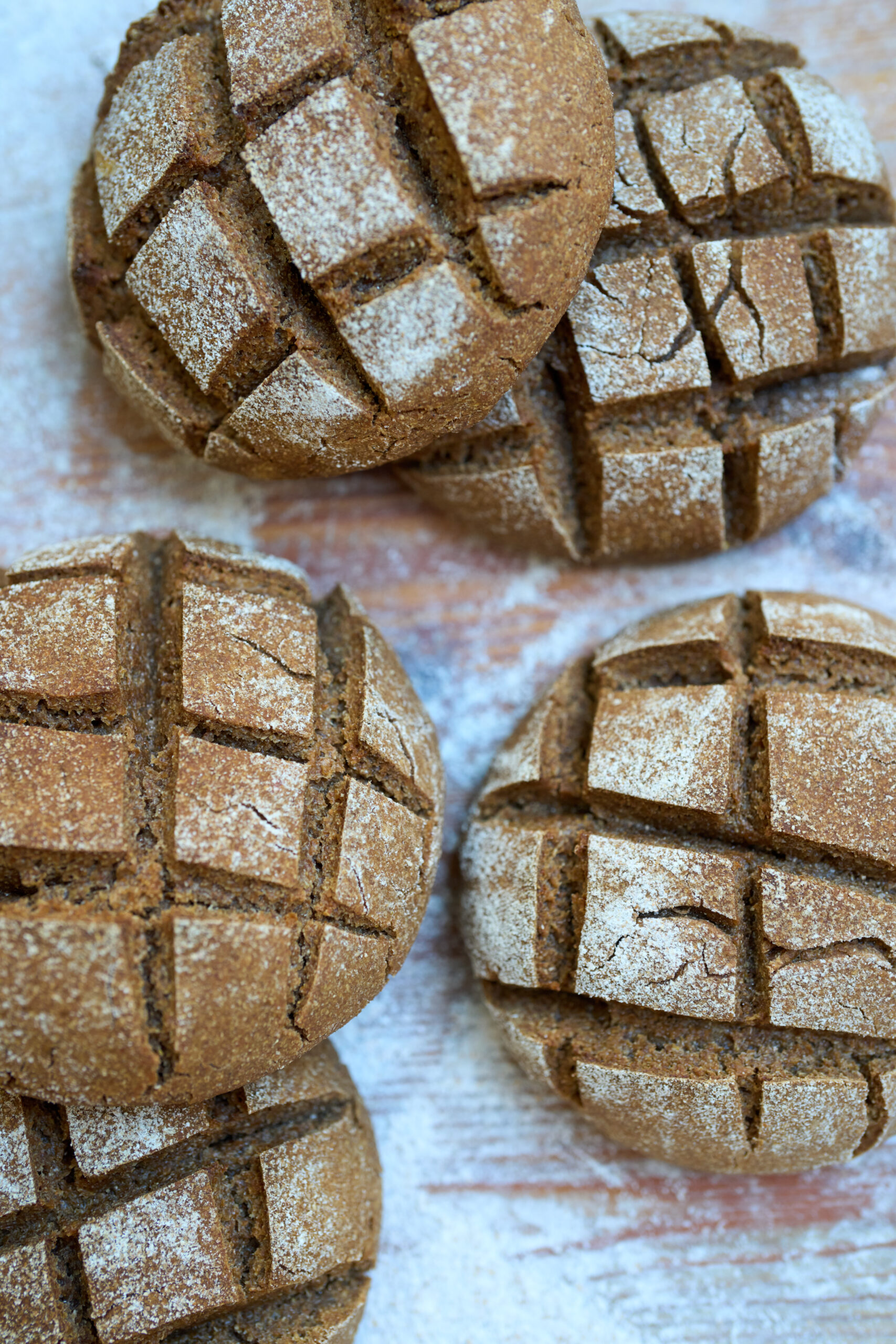
Rye behaves differently from wheat. Less gluten, faster enzyme activity, a fermentation that must be managed carefully to prevent structural collapse. The result, when the process is correct, is a dense, moist loaf with a crumb that is cohesive rather than open — different by design, not by limitation.
The flavour is complex: slightly sour, slightly earthy, with the grain carrying through clearly. It does not peak immediately after baking. The starch structure continues to stabilise for two to three days, and the flavour deepens with time. It is best eaten a day after baking, in thicker slices, with something that can hold against it.
At its best: one to three days after baking.
Barley sourdough
Barley sourdough Stone-milled whole barley · Ancient grain
Process: Adjusted hydration for barley’s absorption · Dense structure · Earthy, slightly sweet character
Barley was in bread long before modern wheat became dominant. It produces a denser loaf than wheat sourdough, with a slightly sweet, earthy character that reflects the grain directly. The crumb is compact and moist. The flavour is mild but distinctive — the sweetness of barley present without being pronounced.
It is bread that rewards eating slowly, and that pairs well with savoury accompaniments that benefit from the grain’s slight natural sweetness.
At its best: day of baking and the following day.
Einkorn sourdough
Einkorn sourdough Stone-milled whole einkorn (Triticum monococcum) · 10,000-year-old wheat variety
Process: Delicate gluten — careful mixing and handling · High carotenoid content · Golden crumb colour
Einkorn requires different handling from modern wheat — its gluten is more extensible and more fragile, and it cannot be worked the same way. When the process is adapted to what einkorn actually is, the result is distinctive: a golden crumb from the high carotenoid content of the flour, a flavour that is nutty and complex, and bread that is clearly unlike anything produced from modern wheat.
It is not a recreation of ancient bread. It is what einkorn produces when stone-milled and fermented with care.
At its best: day of baking.
Emmer Sourdough
Emmer sourdough Stone-milled whole emmer (Triticum dicoccum) · Also known as farro
Process: Hulled wheat — additional preparation before milling · Dense dough · Full grain character in flavour
Emmer — known also as farro — is one of the ancient wheats with deep history in Mediterranean bread. Its gluten builds differently from modern wheat, producing a denser dough that develops strength through time rather than through intensive mixing.
The bread is substantial and full-flavoured: earthy, complex, with the grain’s character present throughout. It is not bread designed for lightness. It is bread designed for flavour — for eating that is slower and more deliberate.
At its best: day of baking and the following day.
Durum Sourdough
Durum sourdough Stone-milled whole durum wheat · Hard wheat, high protein
Process: Strong gluten development · High protein absorption · Golden colour from carotenoids
Durum is the hardest of the common wheats. Stone-milled whole, it produces golden flour with strong gluten potential and pronounced flavour. The bread is chewy, with a crumb that has structure and density without being heavy.
The golden colour comes from the grain’s high carotenoid content — visible in the crumb before it even reaches the oven. The flavour is forward and complex. It is bread that earns its place as a main element in a meal.
At its best: day of baking and the day after.
Mixed grain and seeds sourdough
Mixed grain and seeds sourdough Seven grains · Seven seeds · Stone-milled in-house
Grain composition: 40% wheat · 20% rye · 10% barley · 10% durum · 10% corn · 5% einkorn · 5% emmer
Seed mix (20% of total weight): sunflower · pumpkin · flax · black seeds · poppy · sesame · broken rye · rolled oat
The same seven-grain base as the mixed grain sourdough, with a 20% seed mix incorporated into the dough. The seeds are not a topping — they are part of the dough itself, present throughout the crumb.
Each seed contributes something distinct: sunflower and pumpkin add texture and fat; flax and black seeds bring intensity; poppy and sesame add their characteristic bitterness; broken rye and rolled oat integrate with the grain structure of the dough itself. The result is a bread with significant complexity — in flavour, in texture, and in nutritional density.
At its best: day of baking and the following day. Keeps well and toasts exceptionally.
Mixed Grain Sourdough
Mixed grain sourdough Seven grains · Stone-milled in-house
Grain composition: 40% wheat · 20% rye · 10% barley · 10% durum · 10% corn · 5% einkorn · 5% emmer
Most blended breads are wheat breads with a small addition of another grain for label appeal. This is not that. Every grain in this loaf is present in a quantity that affects the fermentation behaviour, the crumb structure, and the flavour. The wheat provides the structural foundation. The rye adds moisture and complexity. The barley contributes its slight sweetness. The durum brings chew and colour. The corn adds density. The einkorn and emmer — present in smaller quantities — round the flavour with their ancient grain character.
The result is a bread that carries all seven grains simultaneously — each present, none dominant.
At its best: day of baking and the following day.
Corn Bread
Corn bread Stone-milled Albanian corn (Zea mays) · Misri · Local agricultural heritage
Process: No gluten network — different structure entirely · Starch-based · Dense, golden, slightly sweet
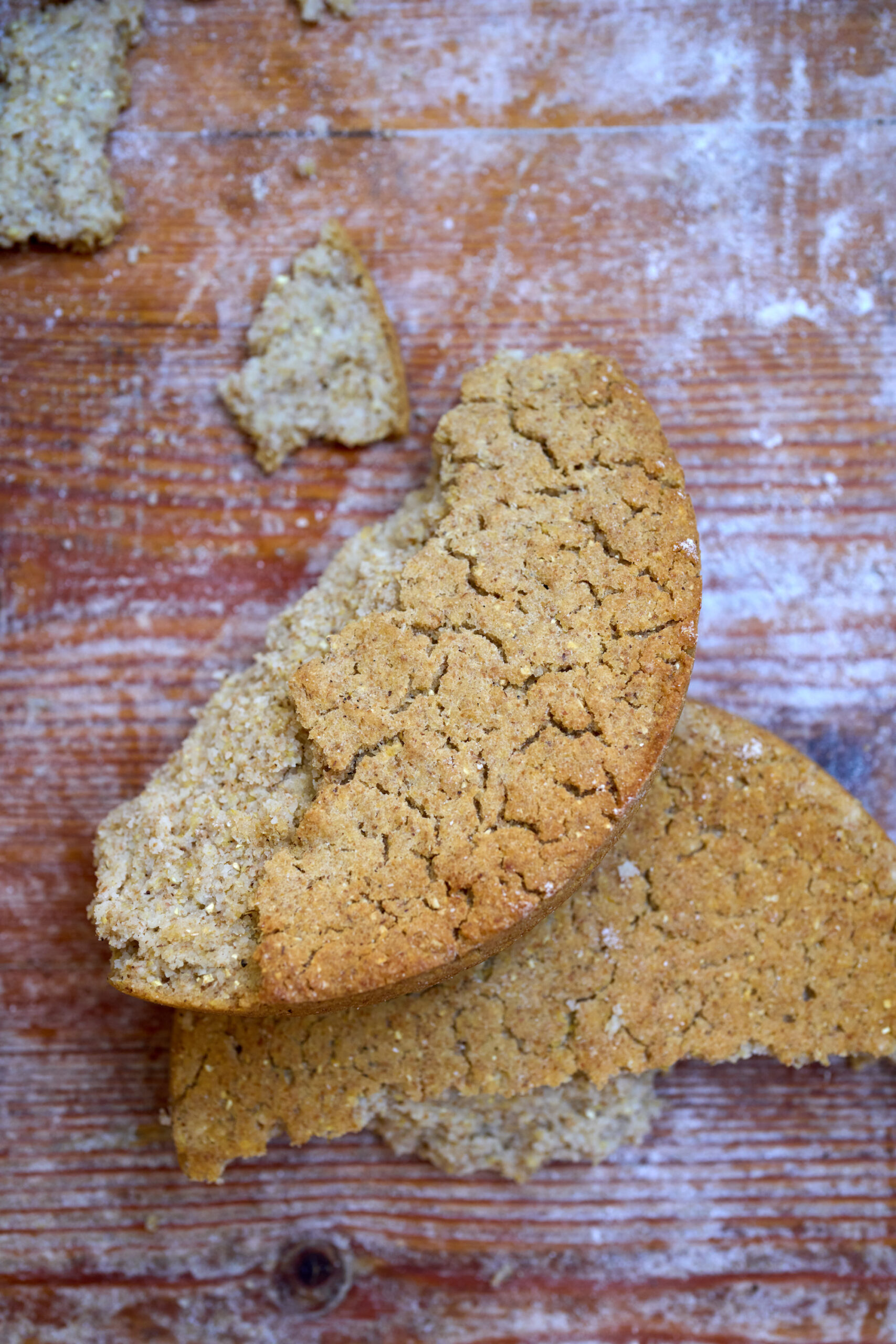
Corn is unlike any other bread Artizani makes. It contains no gluten. The structure comes from the starch in the grain and the fermentation process around it — different mechanics, different result.
Albanian corn — misri — has been grown in this region for centuries. The bread carries that local agricultural identity in its character and appearance: dense, compact, with a texture closer to polenta than to wheat bread. Golden colour, slightly sweet flavour. Not bread that mimics wheat. Bread that is what corn is.
At its best: day of baking. Can be sliced thinly and toasted the following day
How to get the bread.
The bread is available daily at the bakery. We bake a limited number of loaves each day — not as a strategy, but as a consequence of the process. Fresh-milled flour, long fermentation, and a fixed oven capacity determine the quantity.
To ensure you get the bread you want, come early in the day or reserve in advance.
Reservations are accepted by phone or message the day before. We confirm based on what is scheduled, and we ask that you collect what you reserve. No advance payment.
Rruga Muharrem Butka, 18 · Tiranë, 1001 · Albania Phone: 0672018396 Hours: 07:00 – 22:00
→ Find us